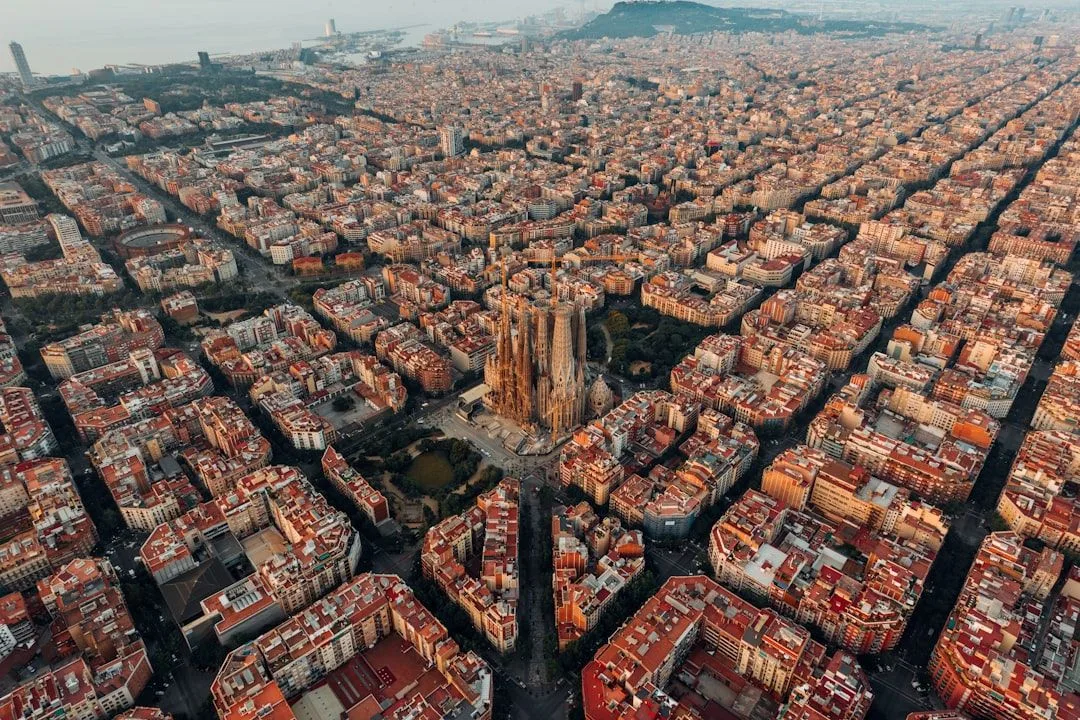
Barcelona's famous sights are timed, ticketed and full. Its neighbourhoods are free and largely empty of visitors, and they are where the city actually is.
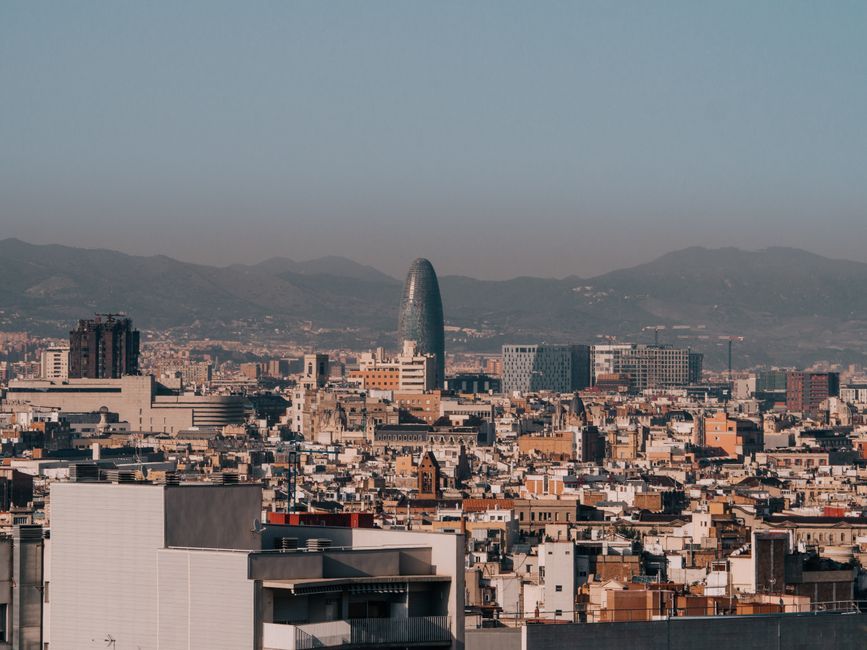
Gràcia
A former independent village absorbed into the city, above the Eixample. Small squares, low buildings, and a scale that feels nothing like the grid below it.
The best concentration of restaurants and bars for residents rather than visitors. Plaça del Sol and Plaça de la Virreina fill in the evening.
The Festa Major de Gràcia in August decorates whole streets in a neighbourhood competition, which is genuinely spectacular and entirely free.
Sant Antoni
Around its restored market hall, which has Roman remains visible beneath it.
Ten years ago this was residential and unremarkable; it is now one of the better eating areas in the city and still priced for people who live there.
The market bars serve excellent food at counter prices — far better value than La Boqueria, which is priced for the Ramblas.
Poblenou
A former industrial district turned technology and design quarter, with converted factories and a wide pedestrian rambla of its own.
Its beaches — Bogatell, Mar Bella — are quieter than Barceloneta and cleaner.
A few metro stops from the old city and a fraction of the visitor density.
El Born and the Gothic Quarter
The old city, which does get visitors, though the residential streets away from the main routes do not.
Santa Maria del Mar — a fourteenth-century church of extraordinary austerity, free outside guided hours, and a relief after the Modernisme.
The Picasso Museum, in five medieval palaces.
MUHBA, where you descend into the excavated Roman city beneath the Gothic Quarter — streets, workshops and all.
Montjuïc
The hill, reached by funicular or cable car, and consistently overlooked.
MNAC — Romanesque frescoes cut from Pyrenean churches and reinstalled in reconstructed apses. One of the most important medieval collections anywhere, rarely busy.
The Miró Foundation, in a building designed for it by his friend Sert.
Gardens, the castle, and the Olympic ring.
The free view
The Bunkers del Carmel — a former anti-aircraft position on a hill in Guinardó, with a 360-degree view over the whole city to the sea.
Free, reached by bus and a short climb, and busiest at sunset. Residents have asked visitors to keep the noise down in the evening, which is worth respecting.
Where not to spend time
The Ramblas. A tourist strip, a pickpocketing hotspot, and lined with restaurants nobody local eats at.
Barceloneta's main beach in August, when it is at capacity.
Practical
The metro reaches all of these in ten to twenty minutes from the centre.
Lunch menus across the city cost roughly half the evening equivalent for the same food.
Barcelona has a live tension about tourism. Keeping noise down in residential streets at night is the single thing visitors can do about it.